Mahavir Temple, Patna
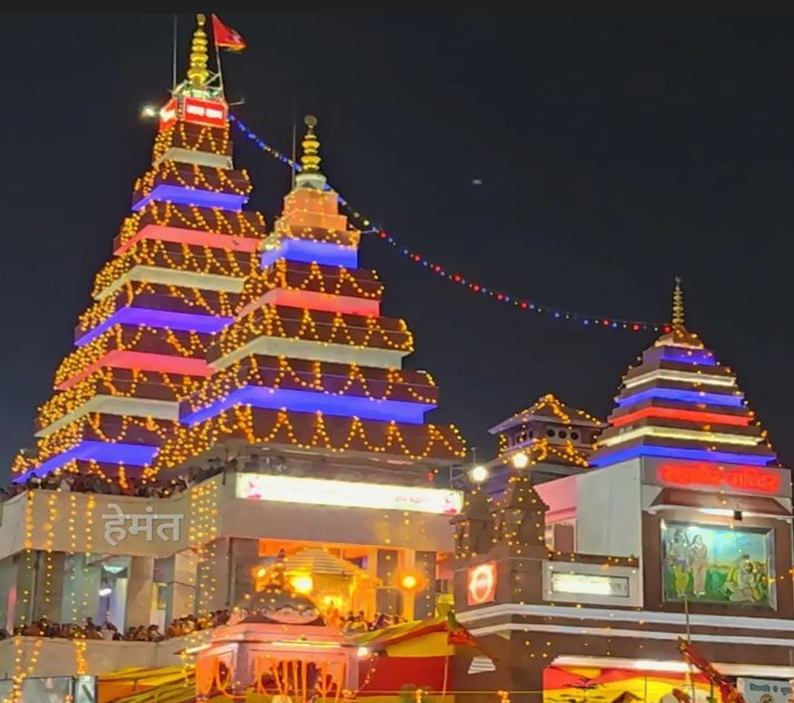
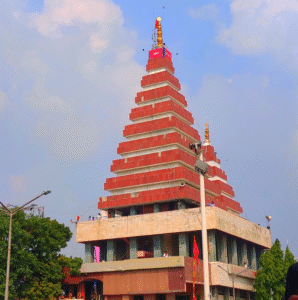
Mahavir Temple is a temple dedicated to the Hindu deity Hanuman, located in Patna, Bihar, India. It is one of the finest and oldest Hanuman temples in the country. Mahavir Temple is the most famous temple in North India. Millions of devotees visit the temple every year. The idol of Sankat Mochan (Hanuman) holds a special place in the hearts of devotees.
The ancient Mahavir Temple, a center of faith.
Mahavir Temple, located in Patna, Bihar, India, is one of the holiest Hindu temples dedicated to Lord Hanuman. It is one of the finest and oldest Hanuman temples in the country. Mahavir Temple is the most famous temple in North India. Millions of devotees visit the temple every year. The idol of Sankat Mochan (remover of troubles) holds a special place in the hearts of devotees. Many people visit this temple on the auspicious occasion of Ram Navami.
This temple, connected to the faith of millions of devotees, is known for its religious significance and beliefs. It is believed that every devotee who visits this temple has their wishes fulfilled, and no devotee returns empty-handed. There is no discrimination of any kind against devotees at the Mahavir Temple.
The temple was constructed after extensive efforts by the Honorable Acharya Kishore Kunal and his associates. The Honorable Acharya Kishore Kunal also serves as the secretary of the Mahavir Mandir Trust.
The Mahavir Temple is not only a center of faith for millions of devotees but also a means of providing assistance to the poor and underprivileged.
The temple has priests of the highest caliber from the Ramanandi sect, including Bairagi sadhus (ascetics) and Sanskrit scholars, as well as Dalit priests, all of whom perform their duties with utmost devotion.
Lord Hanuman, enshrined here, is truly a remover of people’s troubles. The offerings and donations received at this temple are used to provide cancer treatment to the poor and underprivileged, and for other charitable and philanthropic activities.
The temple’s trust is called the Shri Mahavir Sthan Nyas Samiti, which is the largest religious trust in North India. Besides the Mahavir Cancer Institute and Research Center, this trust operates several other hospitals, including Mahavir Vatsalya Hospital and Mahavir Arogya Hospital, for the benefit of the poor and needy. This religious trust also runs orphanages in rural areas of Bihar.
The temple was rebuilt on a war footing without any membership fees. Donations came in voluntarily because people had faith in the individuals associated with the temple’s renovation. Thousands of devotees participated in the “Kar Seva” (voluntary service) organized during the temple’s reconstruction.
This is a temple where devotees receive all the necessary materials to perform rituals upon payment of a fixed fee, and the priests’ “Dakshina” (offering) is paid by the temple management.
Recitation of the Valmiki Ramayana in the morning is a daily routine, which includes regular readings from all important scriptures.
Besides the main temple, there are also temples dedicated to Lord Rama, Lord Krishna, and Goddess Durga within the complex. These temples house idols of various deities, including Radha-Krishna, Rama-Sita, Shiva-Parvati, Nandi, and Lord Ganesha. There is also a Peepal tree next to the temple, where Lord Shani is believed to reside.
The Mahavir Temple is a leader in charitable activities and social service. With the support of devotees and through various rituals, the committee has established four charitable hospitals in Patna, and two more are under construction in North Bihar. The committee has provided ₹50 lakhs for the treatment of poor cancer patients and has given approximately the same amount for the assistance of underprivileged sections of society and deserving individuals.
This is the first religious trust to institute the Shravan Kumar Award for dedicated service to parents. The first prize is ₹1,00,000, the second ₹50,000, and the third ₹25,000. In addition, there are 10 awards of ₹5,000 each. Each award is given for dedicated service to one’s parents.
Mahavir Temple, Patna, is one of the leading Hanuman temples in the country. Thousands of devotees visit the temple to worship Lord Hanuman. It is a wish-fulfilling temple, where devotees believe their wishes are granted, which explains the ever-increasing number of visitors.
In 1948, the Patna High Court declared it a public temple. The new, magnificent temple was constructed between 1983 and 1985 with the contributions of Acharya Kishore Kunal and his devotees, and it is now one of the most renowned temples in the country.
The temple houses two idols of Lord Hanuman side by side: the first representing “Paritranaya Sadhunam,” meaning “for the protection of the virtuous,” and the second “Vinashaya Cha Dushkritam,” meaning “for the destruction of evil.” The temple has been under the Ramanandi sect since 1900, while prior to 1948, it was under the Gosain sect of ascetics.
According to the 1948 judgment of the Patna High Court, the temple has existed since time immemorial.
The current temple was renovated between November 30 and March 4, 1985. The temple complex spans an area of 10,000 square feet. All necessary facilities for visitors and devotees are available within the temple premises. Upon entering the temple complex, to the left, there is a series of steps leading to the main area of the temple, known as the sanctum sanctorum, which houses the idol of Lord Hanuman. Surrounding this is a corridor dedicated to Lord Shiva.
The first floor of the temple houses four shrines of various deities. One of these is the temple of Lord Rama, from where the tour begins. Near the Rama temple is a depiction of Lord Krishna giving a discourse to Arjuna. Next to this is the temple of Goddess Durga. Following this are the idols of Lord Shiva, meditating Mother Parvati, and Nandi, the sacred bull, placed in a wooden enclosure. A Jyotirlinga of Lord Shiva is also enshrined within this wooden enclosure.
On this floor, there is a replica of the Ram Setu (Rama’s Bridge). This bridge is placed in a glass container. The unique feature of this stone is that it weighs only 13,000 mm (approximately 15 kg) and floats in water, never sinking.
The second floor of the temple is used for ritualistic purposes. The ritual hall (Sanskar Mandap) is located on this floor. Here, mantras are chanted, hymns are sung, sacred texts are recited, the Satyanarayan Katha is performed, and other religious rituals are conducted. Various scenes from the Ramayana are also depicted on this floor.
After crossing the meditation hall on the first floor, the idols of Lord Ganesha, Lord Buddha, Lord Satyanarayan, Lord Rama and Sita, and Goddess Saraswati, located on the left, bless the devotees. In front of these deities, beneath a peepal tree, is the temple of Shani Maharaj, built in the shape of a cave, which is very attractive in appearance. The temple’s main complex houses an office, a shop selling religious items, and a bookstore offering books on religious themes. The complex also includes an astrology and handicrafts center, as well as a center for gemstones, which caters to the needs of devotees with expert guidance.
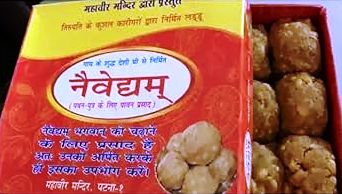
Another unique feature of the temple is its prasad (offering), which is offered to the presiding deities. The prasad offered is called “Naivedyam,” which is prepared by experts from Tirupati and Andhra Pradesh.
The Naivedyam at the Mahavir Temple is synonymous with ladoos (sweet balls) offered to Lord Hanuman. In Sanskrit, Naivedyam means offering food to the deity. This prasad is prepared by experts from Tirupati. It is made with gram flour, sugar, cashews, raisins, green cardamom, Kashmiri saffron, and other flavorings, cooked in ghee, and shaped into balls.
The saffron used in making the Naivedyam is sourced directly from producers in the Pampore district of Kashmir, which is known as the land of gold (saffron) in Kashmir.
The income generated by this temple is used to operate the Mahavir Cancer Institute, Mahavir Arogya Sansthan (health center), Mahavir Netralaya (eye hospital), and Mahavir Vatsalya Hospital, where people receive treatment at minimal costs.