
Dakshineswar Kali Temple: History, Architecture and Spiritual Significance
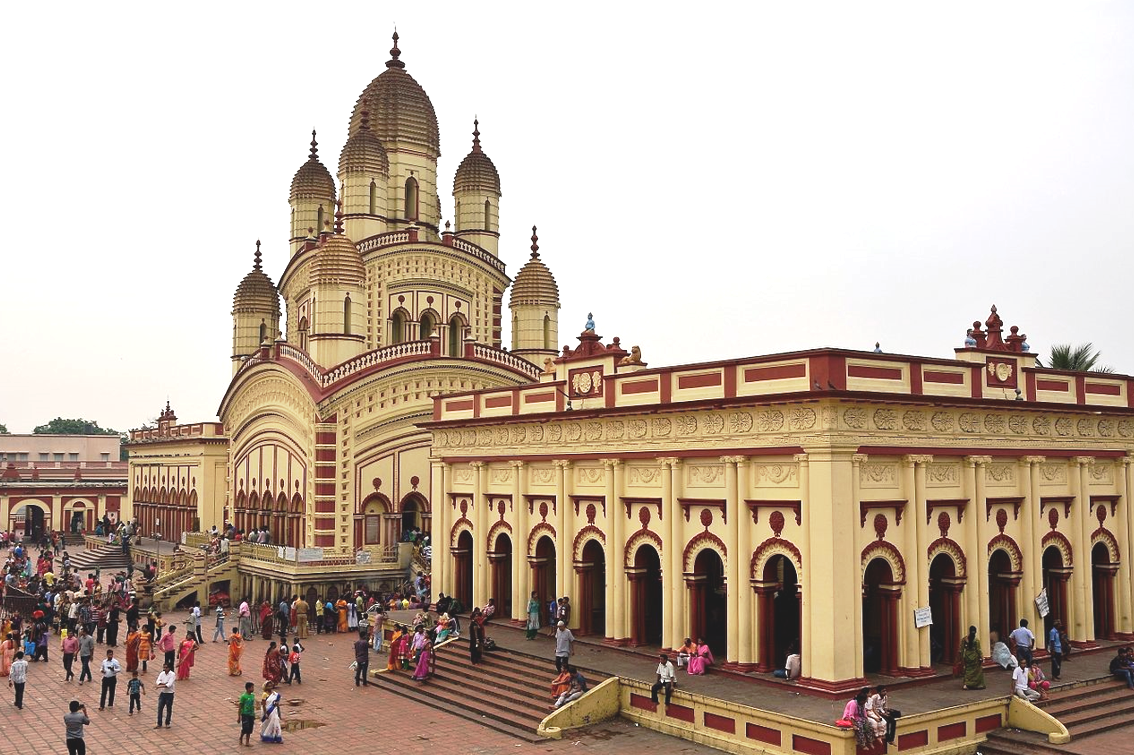
Introduction to Dakshineswar Kali Temple
Located north of Kolkata (West Bengal), the Dakshineswar Kali Temple is dedicated to the Bhavatarini form of Goddess Kali. ‘Bhavatarini’ means “she who helps one cross the ocean of worldly existence.” The temple’s fame is largely due to the great saint Sri Ramakrishna Paramahansa, who lived here and experienced a direct vision of Goddess Kali.
The glorious history of the temple
The story of the construction of the Dakshineswar Temple is truly inspiring. Its foundation was laid by Rani Rasmani in the mid-19th century.
Rani Rasmani’s Dream
According to folklore, in 1847, Rani Rasmani was preparing for a pilgrimage to Varanasi (Kashi). In those days, the journey from Kolkata to Kashi was long and arduous. The night before she was to depart, Goddess Kali appeared to her in a dream and said:
“You do not need to go to Kashi. Build a beautiful temple for me on the banks of the Ganges and install my idol there. I will manifest myself in that idol and accept your worship.”
After this divine dream, the Rani canceled her trip to Kashi and immediately began searching for land to build the temple. She purchased a 20-acre plot of land in Dakshineswar village, which was shaped like a tortoise at the time.
Challenges encountered during construction
In the conservative society of that time, it was a tremendous challenge for a woman (especially a queen from the Shudra caste) to build and consecrate a temple. Despite numerous controversies and legal obstacles, Rani Rasmani remained steadfast in her resolve. Finally, the temple was inaugurated on May 31, 1855, with over one hundred thousand Brahmins invited to the ceremony
The unique architecture of the temple.
The Dakshineswar Temple is a magnificent example of the ‘Navaratna’ style of Bengali architecture.
- Main Temple: It is three stories high and has nine spires (domes) on top.
- Sanctum Sanctorum: In the sanctum sanctorum of the main temple, the idol of Goddess Bhavatarini is seated on a thousand-petaled silver lotus. The goddess stands atop a reclining image of Lord Shiva.
- Shiva Temples: Along the edge of the main courtyard, facing the Hooghly River, there are 12 identical Shiva temples. These temples are built in the ‘Aat-chala’ style, and each temple houses a Jyotirlinga.
- Radha-Krishna Temple: In the northeastern corner of the temple complex is a beautiful temple dedicated to Lord Vishnu and Goddess Radha.
- Nat Mandir: In front of the main temple is a large pillared hall called the ‘Nat Mandir’. Religious discourses and devotional singing take place here.
Sri Ramakrishna Paramahansa and Dakshineswar
The history of Dakshineswar is incomplete without Ramakrishna Paramahansa. Rani Rasmani had appointed his elder brother, Ramkumar Chattopadhyay, as the chief priest of the temple. After his death, Ramakrishna took over the responsibility in 1856.
Direct Conversation with Mother Kali
For Ramakrishna Paramahansa, Mother Kali was not just an idol, but a living presence. It is said that he would sit in front of the idol of the Mother for hours, talking to her and feeding her with his own hands. It was this unparalleled devotion that attracted great disciples like Swami Vivekananda to this place.
Key Locations:
Ramakrishna Dev’s Room: The room where Thakur (Ramakrishna) lived is still preserved in the northwest corner of the temple complex.
Panchavati: This is a cluster of five sacred trees (Banyan, Peepal, Neem, Amla, and Bel), where Thakur performed rigorous Tantric and Yogic practices for many years.
Recognized as a Shakti Peetha
Although the Dakshineswar Temple is not directly included in the list of the 51 principal Shakti Peethas (Kalighat is considered the main Shakti Peetha), many scholars and devotees consider it a sub-Shakti Peetha. It is believed that some of the toes of Goddess Sati’s right foot fell here. This is why the energy of this place is considered to be very powerful and auspicious.
Useful information for visiting Dakshineswar
Temple Timings
If you are visiting for the first time, please note this information:
The temple is open 365 days a year, but the timings may vary slightly during summer and winter:
October to March: 6:00 AM to 12:30 PM and 3:30 PM to 8:30 PM.
April to September: 5:30 AM to 12:30 PM and 3:30 PM to 9:00 PM.
Travel Tips
Avoid Crowds: Tuesdays, Saturdays, and Amavasya (new moon) days are very crowded. For a peaceful darshan, arrive early on regular days.
Mobile Phones and Photography: Photography is strictly prohibited inside the main temple complex and the sanctum sanctorum. You will have to deposit your phone in a locker.
Dress Code: Dress modestly. Avoid wearing shorts or revealing clothing.
How to reach ?
By Metro: The last station of the Kolkata Metro’s ‘Blue Line’ is ‘Dakshineswar’. The temple is just a 5-10 minute walk from the station.
By Train: You can take a local train from Sealdah station towards ‘Dankuni’ and get off at Dakshineswar station.
By Ferry: Regular ferry services are available from Belur Math to Dakshineswar, offering a scenic ride on the Hooghly River.
Detailed layout of the temple complex
This Temple complex is very large. To understand its layout, you can follow this guide:
- Kutubari: This is where Rani Rasmani’s son-in-law and the temple administrator, Mathura Babu, lived. It holds many memories associated with the life of Ramakrishna Dev.
- Ganga Ghat: Behind the temple are large steps leading down to the Hooghly River (Ganges). Devotees bathe here before entering the temple.
- Canal: There is a small canal near the temple, which was historically built for drainage and to keep the complex clean.
Major festivals and celebrations
The festivals at Dakshineswar are a sight to behold:
Kali Puja (Diwali): This is the biggest festival here. Special pujas and aarti are performed throughout the night.
Snan Yatra: This festival is celebrated with great pomp and show on the anniversary of the temple’s consecration.
Kalpataru Utsav (January 1st): On this day, Ramakrishna Paramahansa blessed his devotees by becoming the ‘Kalpataru’ (wish-fulfilling tree).
Conclusion
Dakshineswar Kali Temple is not just a religious site; it’s a school of peace and self-realization. The sound of the Hooghly River’s waves and the echoing temple bells transport your mind to a different realm. If you are tired of the hustle and bustle of life and seek mental peace, then you must visit and bow your head at the feet of Mother Bhavatarini at least once.
Are you also planning a trip to Dakshineswar Kali Temple? Let us know in the comments or share your experience from your previous visit!