
Qutub Minar: History, Architecture, and Complete Visitor Information
- Introduction
- History of Qutub Minar
- Architectural Features
- Other Main Attractions in the Qutub Complex
- Interesting and Mysterious Facts about Qutub Minar
- How to Reach Qutub Minar
- Tickets, Timings, and Best Time to Visit
- Essential Tips for Tourists
- Conclusion
1. Introduction
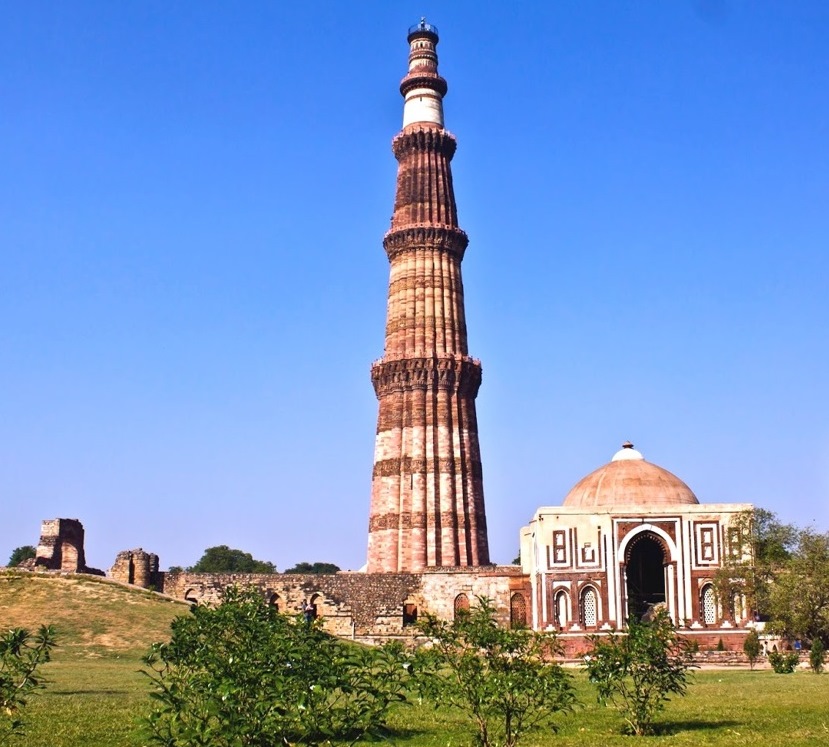
Located in Mehrauli, in South Delhi, often referred to as the heart of Delhi, the Qutub Minar is one of India’s most iconic historical monuments. It is not only the tallest brick minaret in India but also in the world. This 72.5-meter-tall minaret is a UNESCO World Heritage Site. Every year, millions of domestic and international tourists visit to admire its grandeur and the centuries-old history it embodies.
2. The History of Qutub Minar
The construction of the Qutub Minar was not completed by a single ruler, but by several generations of sultans.
- Beginning (1199 CE): Qutb-ud-din Aibak, the founder of the Delhi Sultanate, laid the foundation of the minaret. He only managed to build the first story.
- Expansion (1211-1236 CE): Aibak’s successor and son-in-law, Iltutmish, added three more stories to it.
- Reconstruction and Final Story: In 1368, the upper part of the minaret was damaged by lightning. Firoz Shah Tughlaq then repaired it and added the fifth and final story.
- Later Repairs: Sikandar Lodi and later, Major Robert Smith during the British period, also contributed to its repair.
3. Architectural features (Architectural Marvel)
The Qutub Minar is a prime example of Indo-Islamic architecture.
- Height and Structure: Its total height is 72.5 meters (238 feet). The base diameter is 14.3 meters, tapering to just 2.7 meters at the top.
- Materials: The first three stories are constructed of red sandstone, while the fourth and fifth stories use both marble and sandstone.
- Carvings: The minaret’s walls are adorned with verses from the Quran and beautiful floral motifs. It has a total of 379 steps leading to the top (access to the interior is currently closed for safety reasons).
4. Other main attractions of the Qutub Complex
Around the Qutub Minar, there are several buildings that are a treasure trove for history enthusiasts:
Iron Pillar
Located in the courtyard of the Qutub Minar, this 7-meter-tall iron pillar is a marvel of science. Built in the 4th century (Gupta period), this pillar remains rust-free despite being exposed to the elements for centuries.
Quwwat-ul-Islam Mosque
This is one of the oldest mosques in Delhi. According to historical accounts, it was constructed from the remains of 27 Hindu and Jain temples, the carvings of which can still be seen on its pillars.
Alai Minar
Alauddin Khilji wanted to build a minaret twice as tall as the Qutub Minar, but it remained unfinished due to his death. Only its base remains today.
Tomb of Iltutmish
This tomb is famous for its intricate carvings and geometric patterns. Its roof is now missing, offering a stunning view of the sky from inside.
5. Interesting and mysterious facts about Qutub Minar
- Tilt: Did you know that the Qutub Minar is slightly tilted, much like the Leaning Tower of Pisa? It remains safe due to continuous repairs.
- The Mystery of the Name: Some believe it was named after Qutb-ud-din Aibak, while others believe it was built in memory of the Sufi saint Bakhtiyar Kaki.
- 1981 Tragedy: On December 4, 1981, following a stampede inside the minaret, entry to the interior was permanently closed to the public.
- Bollywood Connection: The famous song “Dil Ka Bhanwar Kare Pukar” from Dev Anand’s film ‘Tere Ghar Ke Samne’ was supposed to be filmed here, but since the camera couldn’t fit inside, a set was created instead.
6. How to reach Qutub Minar?
Being located in Delhi, it’s very easy to reach this place:
- Metro (best option): The nearest metro station is ‘Qutub Minar Metro Station’ on the Yellow Line. From there, you can take an auto-rickshaw or e-rickshaw.
- Bus: Buses to Mehrauli are available from almost every part of Delhi.
- Taxi/Cab: You can also travel by Ola/Uber or your own car. Ample parking is available on the premises.
7. Tickets, timings and visiting hours (Timing and Entry Fee 2026)
Timings: 7:00 AM to 9:00 PM (Timings have been extended due to the evening light show).
Ticket Price:
- Indian Tourists: ₹35 (Online), ₹50 (Cash)
- Foreign Tourists: ₹550 (Online), ₹600 (Cash)
- Entry is free for children under 15 years of age.
Best Time to Visit: The period between October and March is the most pleasant. Don’t miss the ‘Light and Sound Show’ in the evening.
8. Essential tips for tourists (Travel Tips)
- Wear comfortable shoes: The complex is quite large, and you’ll have to do a lot of walking.
- Guide: If you have a keen interest in history, be sure to hire an official guide or use an audio guide.
- Photography: Tripods are not allowed, but mobile phone and camera photography is permitted.
- Water and sun protection: Be sure to carry a water bottle and sunscreen.
9. Conclusion
The Qutub Minar is not just a stone structure, but a witness to India’s glorious and turbulent history. Its intricate carvings and towering height still amaze modern engineers. If you’re in Delhi, visiting this historical marvel should be at the top of your travel bucket list.
Ashish Ranjan’s advice: If you’re a photography enthusiast, arrive here at 7 AM. The golden sunlight at that time creates a magical glow on the red sandstone, which will bring your photos to life!