
Golden Temple: A symbol of peace, service, and devotion.
The Golden Temple of Amritsar, also known as Sri Harmandir Sahib, is not only the holiest religious site for Sikhs, but also a global symbol of peace, equality, and spirituality for all of humanity.
If you want to learn more about this magnificent site, this article will serve as a comprehensive guide. Let’s delve into its history, architecture, the Langar tradition, and everything else related to tourism.
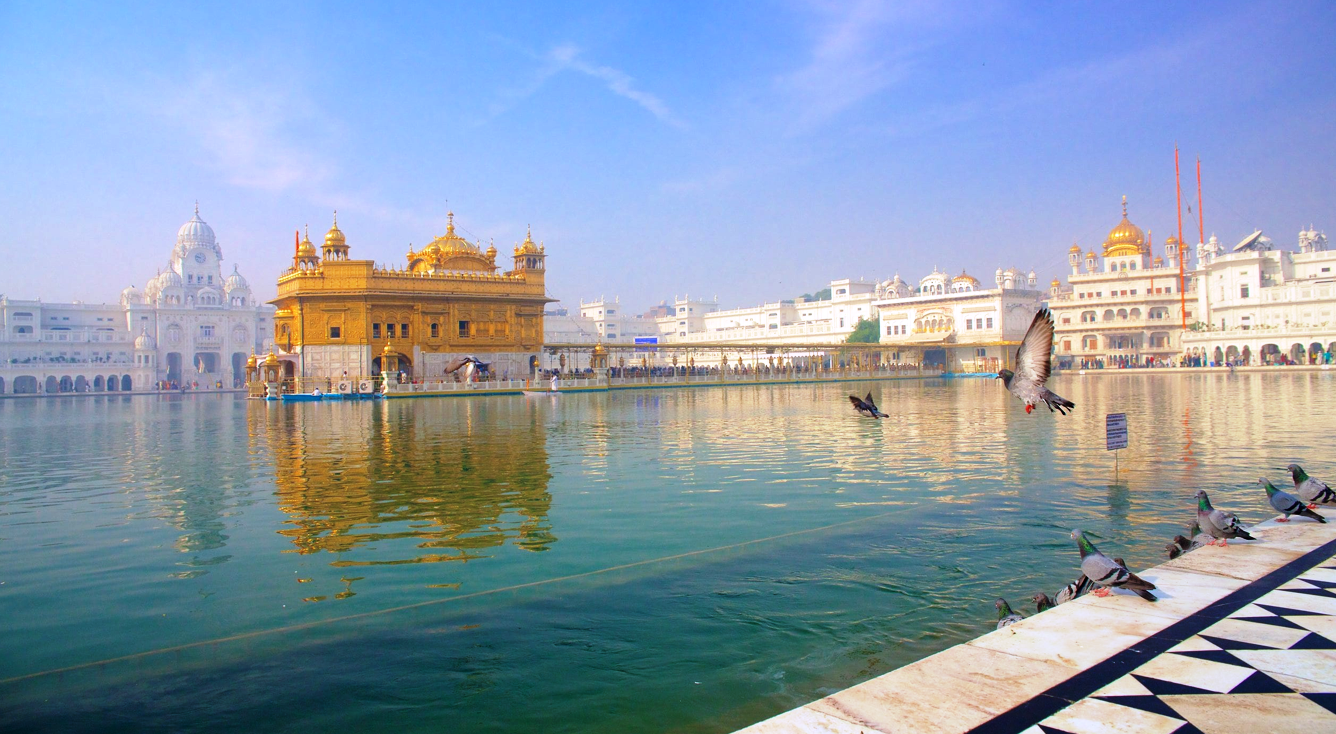
The Golden Temple, located in Amritsar, Punjab, is famous worldwide for its golden splendor and serene atmosphere. ‘Harmandir’ means ‘House of God’. People of all religions, castes, and creeds come here to pay their respects without any discrimination. The melodious chanting of Gurbani that fills the air and the tranquil waters of the sacred pool provide solace to the soul.
The glorious history of the Golden Temple (Harmandir Sahib)
The history of the Golden Temple is a unique example of sacrifice, devotion, and struggle.
1. Foundation and Construction
The plan for this holy site was conceived by the fourth Sikh Guru, Guru Ramdas Ji. He initiated the excavation of the ‘Amrit Sarovar’ (Pool of Nectar), after which the city was named ‘Amritsar’. The temple’s construction was carried out under the guidance of the fifth Guru, Guru Arjan Dev Ji.
A very significant aspect is that Guru Sahib had the foundation stone of the temple laid by a Muslim Sufi saint, Hazrat Mian Mir. This act was intended to send a message of unity and communal harmony to the society of that time.
2. Installation of Sri Guru Granth Sahib
In 1604, Guru Arjan Dev Ji completed the compilation of the Sikhs’ holy scripture, the ‘Adi Granth’ (now Sri Guru Granth Sahib), and installed it for the first time inside the Golden Temple. Baba Budha Ji was appointed as the first ‘Granthi’ (custodian of the scripture).
3. Destruction and Restoration
In the 18th century, the temple was damaged several times by Afghan invaders (such as Ahmad Shah Abdali). However, Sikh warriors rebuilt it each time. In the early 19th century, Maharaja Ranjit Singh of the Sikh Empire had the upper parts of the temple covered with layers of pure gold, after which it came to be known as the ‘Golden Temple’.
Architectural Marvel and Symbolism
The architecture of the Golden Temple is a magnificent blend of Hindu and Mughal styles, yet it embodies the profound philosophical values of Sikhism.
Four Entrances
The Golden Temple has four entrances, opening in all four directions (north, south, east, and west). This symbolizes that everyone, regardless of their religion or social standing, is welcome at God’s house.
Construction at a Lower Level
While temples are usually built on elevated platforms, the Golden Temple is built slightly below the surrounding ground level. One has to descend steps to reach it, symbolizing humility.
Amrit Sarovar
A large pool of water, known as the ‘Amrit Sarovar’ (Pool of Nectar), surrounds the temple. Devotees believe that bathing in this water cleanses the body and mind of ailments.
Akal Takht
Located directly opposite the temple complex is the ‘Akal Takht,’ meaning ‘Throne of the Immortal.’ It is the supreme political and judicial authority of the Sikhs. It was established by the sixth Guru, Guru Hargobind Sahib Ji.
The world's largest kitchen: The 'Langar' service (The Legend of Langar)
The most remarkable feature of the Golden Temple is its ‘Guru Ka Langar’. It is the world’s largest free community kitchen.
- A message of equality: Here, every day, more than 100,000 people sit together on the floor and eat. Rich and poor, kings and commoners, all are treated equally.
- Selfless service (Sewa): From cooking the food to washing the dishes, all the work in the langar is done by volunteers (sewadars).
- The statistics are astonishing: On average, 12,000 kg of flour, 1,500 kg of rice, and 2,000 kg of lentils are used here daily. This kitchen remains open 24 hours a day, 365 days a year.
Some important rules for visiting the Golden Temple (Rules for Visitors)
If you are planning to visit the Golden Temple, it is mandatory to follow these rules:
- Head Covering: Both men and women are required to cover their heads before entering the premises (with a handkerchief or scarf).
- Footwear: Shoes must be deposited at the ‘Jora Ghar’ (shoe storage area) near the main entrance of the temple.
- Cleanliness: It is mandatory to wash your feet in the small water pools before entering.
- No Intoxication: The consumption of tobacco, alcohol, or any kind of intoxicant is strictly prohibited within or around the temple complex.
- Photography: Photography is allowed near the sarovar (holy tank), but photography is prohibited inside the main temple (sanctum sanctorum).
How to get there and when to go?
- How to get there: Amritsar has an international airport (Sri Guru Ram Dass Jee International Airport) and a major railway station. It is also well-connected to Delhi and other major cities by road.
- When to go: The best time to visit the Golden Temple is between October and March when the weather is pleasant. However, the atmosphere during festivals like Baisakhi, Diwali, and Gurpurab is truly spectacular.
Conclusion
The Golden Temple is not just a religious building, but an experience. The tranquility, the taste of the langar (community meal), and the chanting of ‘Waheguru’ transport you to a different world. If you are seeking peace and spirituality in your life, a visit to the Golden Temple in Amritsar is a must.
Are you planning a trip to the Golden Temple? If you have any questions or would like to share your experience from a previous visit, please let us know in the comments!
Would you like me to create a detailed 2-day itinerary for your Amritsar trip?