
Delhi Metro: The Lifeline of India's Capital – Complete Information
Today, it’s impossible to imagine Delhi and the NCR (National Capital Region) without the Delhi Metro. Whether it’s the scorching heat or Delhi’s notorious traffic, the metro has not only made commuting easier but has also transformed the lifestyle of Delhiites.
If you are visiting Delhi or live here, this blog will serve as a complete guide for you. In this blog, we will discuss in detail the history of the Delhi Metro, its route map, fares, timings, and all the important rules related to traveling on the metro.
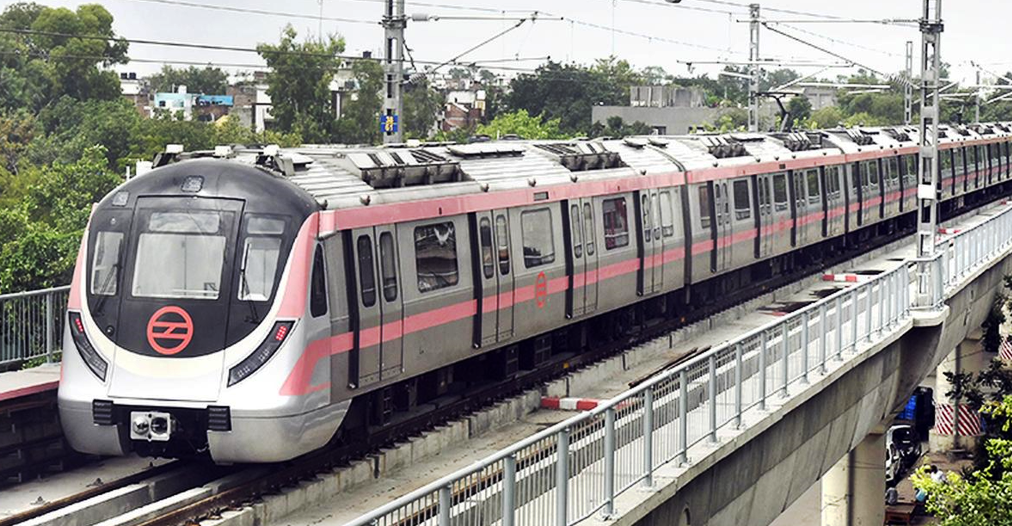
The dream of the Delhi Metro began in the 1990s. The Government of India and the Government of Delhi jointly established the Delhi Metro Rail Corporation (DMRC) on May 3, 1995.
Inauguration: The first Delhi Metro train service commenced on December 24, 2002.
First Line: The Red Line (Shahdara to Tis Hazari).
Metro Man: E. Sreedharan is considered the father of the Delhi Metro, under whose expert leadership this vast network was completed ahead of schedule.
Today, the network spans over 390 kilometers and includes more than 285 stations.
Delhi Metro Lines and their Routes
The Delhi Metro is very easy to navigate because each line is assigned a specific color code:
1. Red Line (Rithala to Shaheed Sthal)
This is Delhi’s first metro line. It connects North-West Delhi to Ghaziabad.
2. Yellow Line (Samaypur Badli to Millennium City Centre Gurugram)
This is one of the busiest lines, connecting North Delhi to the corporate hub of Gurugram. Major stations like Kashmere Gate, Chandni Chowk, and New Delhi are on this line.
3. Blue Line (Dwarka Sector 21 to Noida Electronic City/Vaishali)
One of the longest lines of the Delhi Metro, connecting Dwarka directly to Noida and Ghaziabad.
4. Pink Line (Majlis Park to Shiv Vihar)
This is called the ‘Ring Corridor’ because it forms a complete circle around Delhi.
5. Airport Express Line (Orange Line)
This connects New Delhi Railway Station to Indira Gandhi International Airport (IGI Airport) in just 20-25 minutes.
Delhi Metro Fare Structure (2026)
Delhi Metro fares are determined based on distance. On weekdays (Monday-Saturday), the minimum fare is ₹10 and the maximum is ₹60, while on Sundays and public holidays, the minimum is ₹10 and the maximum is ₹50.
Note: You get a 10% discount on every trip when you use a smart card.
Delhi Metro Timings
- Start time: Metro service begins at 5:30 AM on most lines (8:00 AM on Sundays).
- End time: The last train departs from the terminal station between approximately 11:00 PM and 11:30 PM.
- Frequency: During peak hours (morning and evening), trains are available every 2-3 minutes.
Ticket options for travel (Types of Tickets)
- Smart Card: The best option for regular commuters. It can be purchased for ₹200 (₹50 security deposit).
- Token: For a single journey.
- Tourist Card: Unlimited travel cards are available for tourists for 1 day (₹200) and 3 days (₹500).
- QR Code Ticket: You can now also book tickets on your mobile phone through the ‘DMRC Travel’ app or WhatsApp.
Key rules and safety guidelines for the Delhi Metro.
When traveling on the metro, it is mandatory to follow certain strict rules:
- Smoking and Eating: Eating, drinking, or smoking is strictly prohibited on metro trains and within station premises.
- Women’s Coach: The first compartment of every train (in the direction of travel) is reserved for women. Men are not allowed to enter this compartment (penalty ₹250).
- Photography: For security reasons, photography is prohibited inside the station premises.
- Pets: Pets are not allowed on the metro.
Future plans: Phase 4 (Delhi Metro Phase 4 Expansion)
The expansion of the Delhi Metro is still underway. Work is progressing on new routes under Phase 4, which are expected to be completed by 2026-2028:
- Golden Line (Tughlakabad to Aerocity): This will improve connectivity in South Delhi.
- Magenta Line extension: From Janakpuri West to R.K. Ashram Marg.
- Pink Line extension: From Majlis Park to Maujpur.
Major tourist attractions near metro stations
If you’re visiting Delhi, the metro is the cheapest and best way to get around:
- Red Fort: Chandni Chowk or Lal Qila Metro Station.
- Qutub Minar: Qutub Minar Metro Station (Yellow Line).
- Akshardham Temple: Akshardham Metro Station (Blue Line).
- India Gate: Central Secretariat Metro Station.
- Lotus Temple: Kalkaji Mandir Metro Station.
Conclusion
The Delhi Metro is not just a mode of transport, but a symbol of Delhi’s progress. It has not only helped reduce pollution but has also saved millions of people time and money.
Pro tip: Use the ‘DMRC Travel’ app to avoid crowds and always keep your smart card recharged.