Bokaro Steel Plant: The powerful backbone of India's industrial development.
Steel has played a pivotal role in India’s development journey. When we look at India’s industrial landscape, the Bokaro Steel Plant (BSL), located in the Bokaro district of Jharkhand, shines like a bright star. This unit of Steel Authority of India Limited (SAIL) is not only the country’s fourth integrated steel plant but also holds the distinction of being India’s “first indigenous steel plant.”
In this detailed article, we will discuss the history of the Bokaro Steel Plant, its production capacity, the products it manufactures, and its contribution to the country’s economy.
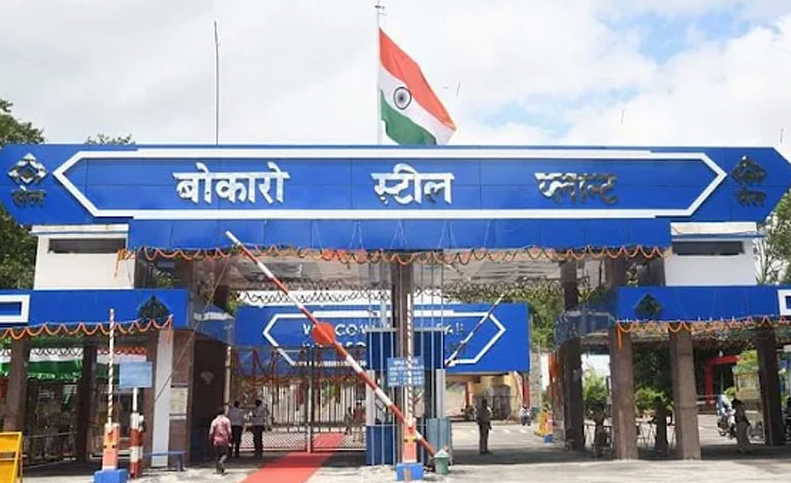
The Bokaro Steel Plant was conceived in the late 1950s. At that time, India, after gaining independence, was dreaming of becoming industrially self-reliant.
Establishment: It was formally established on January 29, 1964, as a limited company.
Foreign Collaboration: To realize this massive project, the then Soviet Union (USSR) provided technical and financial assistance. An agreement in this regard was signed between India and the Soviet Union on January 25, 1965.
Construction and Inauguration: Construction of the plant began on April 6, 1968. On October 2, 1972, India’s then Prime Minister, Indira Gandhi, inaugurated its first blast furnace.
Merger with SAIL: In 1978, under the restructuring of public sector iron and steel companies, it was made a wholly owned unit of Steel Authority of India Limited (SAIL).
Why is Bokaro called an 'indigenous plant'?
Although Bokaro was established with Soviet collaboration, it is considered India’s first indigenous steel plant. This is primarily because most of the equipment, materials, and technical expertise used in its construction were developed in India. It showcased India’s engineering capabilities to the world.
Production capacity and technical specifications
Bokaro Steel Plant’s production journey began with an annual capacity of 1.7 million tonnes (MT). Over time, its capacity has continuously increased through modernization and expansion.
- Current Capacity: Currently, the plant has a capacity to produce approximately 5.25 million tonnes (MTPA) of liquid steel.
- Future Expansion (2025-26): The Government of India recently (in January 2025) unveiled a mega expansion plan worth over ₹20,000 crore for the Bokaro Steel Plant. This aims to increase the plant’s capacity to 7.55 MTPA.
Main Units:
- Coke Oven and By-product Plant: For converting coal into coke.
- Sinter Plant: For preparing iron ore for the furnaces.
- Blast Furnace: Where hot metal (pig iron) is produced.
- Steel Melting Shop (SMS): Where iron is converted into steel.
- Hot Strip Mill (HSM): Bokaro’s biggest strength, where steel is rolled into hot strips (coils).
Main products of Bokaro Steel Plant (Product Range)
Bokaro Steel Plant is famous worldwide for its “flat products.” The steel produced here is used in industries ranging from automobiles to container manufacturing.
Latest Update (2025): Bokaro Steel Plant has recently developed a special 28MnB5 grade (manganese-boron steel) for the agricultural sector, which makes farming equipment more durable.
Impact on the Indian economy and Jharkhand
Bokaro Steel Plant is not just a factory, but the engine of an entire economy.
Economic Contribution:
Employment: It directly employs thousands of people. The upcoming expansion plan is expected to create 2,500 direct and over 10,000 indirect jobs.
Ancillary Industries: The plant has fostered the growth of hundreds of small and medium-sized enterprises (MSMEs) in industrial areas like Balidih in Bokaro.
Self-Reliant India: By producing defense-grade steel (such as DMR-249A steel for naval vessels), it is reducing dependence on imports.
Social Development (CSR):
Bokaro Steel City is considered one of the best-planned cities in India. SAIL provides excellent education (Bokaro Schools), healthcare services (Bokaro General Hospital), and infrastructure here.
The path to the future: Bokaro 2.0
Bokaro will play a crucial role in achieving the Prime Minister’s target of 300 million tons of steel production (by 2030). In the coming years, we will see the following changes here:
A new 4500 cubic meter blast furnace: This will increase production speed and efficiency.
Digitalization (Industry 4.0): Increased use of artificial intelligence (AI) and automation in the production process.
Improved logistics: Expansion of rail and road networks to facilitate easier transportation of steel.
Sustainability and Environmental Protection (Sustainability Initiatives)
In the modern world of 2026, the Bokaro Steel Plant is rapidly moving towards ‘green steel’.
Carbon Emission Reduction: The plant aims to reduce carbon emissions from 2.67 tons to less than 2.2 tons per ton of steel by 2030.
Renewable Energy: A 30 MW floating solar plant and a 20 MW land-based solar project are being established in Bokaro.
Waste Management: The slag produced at the plant is used in cement manufacturing, thereby reducing pollution.
Conclusion
Bokaro Steel Plant is not just a combination of iron and coal, but a glorious saga of the sweat and ‘Swadeshi’ (self-reliance) resolve of millions of Indians. This journey, which began with a small dream in 1964, has today made India a strong player in the global steel market. With its new expansion plans and innovations, Bokaro Steel Plant will continue to make its invaluable contribution to ‘nation-building’ for decades to come.
Would you like to know more about Bokaro Steel City or any other information related to this plant?
Frequently Asked Questions
1. In which state is the Bokaro Steel Plant located?
It is located in the Bokaro district of Jharkhand state.
2. With the help of which country was the Bokaro Steel Plant established?
It was established with the cooperation of the former Soviet Union (USSR).
3. Who currently owns the Bokaro Steel Plant?
It is owned by Steel Authority of India Limited (SAIL), a Maharatna company of the Government of India.
4. Why is Bokaro called the “Steel City”?
It is called the Steel City because it houses Asia’s largest and India’s first indigenous integrated steel plant.
Would you like me to provide more technical information about the Bokaro Steel Plant’s new ₹20,000 crore expansion plan or its special agricultural-grade steel?