
Rajghat Delhi: Mahatma Gandhi's Memorial and an Unparalleled Symbol of Peace – The Complete Guide 2026
Rajghat – the very name evokes an image of serenity amidst the hustle and bustle of the city, a place where silence speaks volumes. Located on the banks of the Yamuna River in Delhi, this place is not just a memorial; it is a living monument to the principles, sacrifices, and simplicity of Mahatma Gandhi, the ‘Father of the Nation’.
If you are planning to visit Delhi or want to understand Bapu’s life up close, this blog will prove to be a complete guide for you.
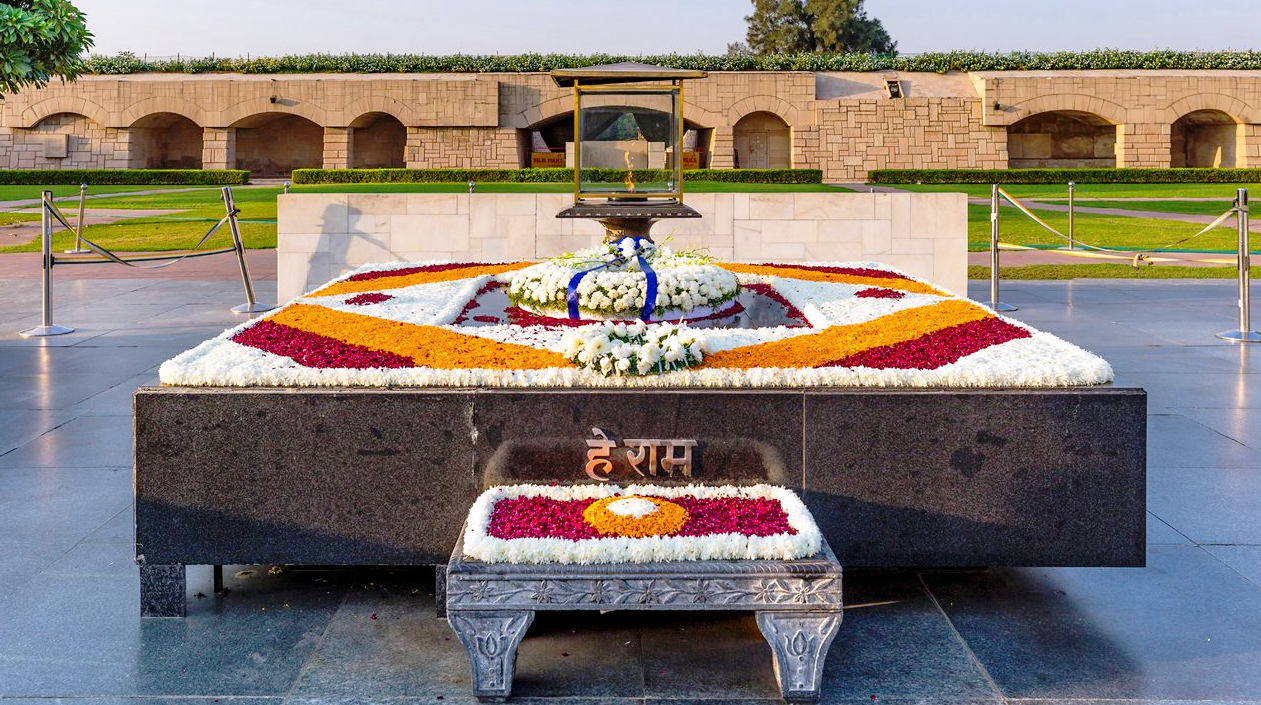
Rajghat’s history is intertwined with India’s freedom struggle and the tragic day that shook the entire world.
The Funeral Site
On January 30, 1948, Mahatma Gandhi was assassinated by Nathuram Godse at Birla House. The following day, January 31, 1948, Bapu’s last rites were performed at this very spot. At that time, it was a simple ghat on the banks of the Yamuna River. Keeping in mind Gandhiji’s simplicity, his memorial was designed to be very simple yet impactful.
Origin of the Name
Originally, ‘Raj Ghat’ was the name of a historical gateway in Old Delhi and a ghat located on the banks of the Yamuna. Over time, this name became famous worldwide because of Gandhiji’s memorial.
The Architecture of Rajghat: Grandeur in simplicity.
Rajghat is not merely a structure of bricks and stones, but a physical manifestation of Gandhian ideology. As you enter through its main gate, you experience a profound sense of peace.
Natural Enclosure and Greenery
To separate this memorial from the busy city streets, high earthen embankments have been constructed around it. This is a magnificent example of architecture that creates a private and tranquil environment without the need for walls. The trees and plants in the vast gardens here reflect the diversity of India.
Eternal Flame: The Immortal Flame of Truth
A brass lamp is situated on one corner of the black marble platform. The eternal flame burning in it conveys the message that although Bapu is no longer physically with us, his ideals of truth and non-violence continue to guide the world.
Other major monuments in the Rajghat complex
People often think that Rajghat is just Mahatma Gandhi’s memorial, but there are also memorials to several other great Indian leaders in the surrounding area. This entire area is called the ‘Samadhi Complex’:
- Shanti Van: The memorial of India’s first Prime Minister, Pandit Jawaharlal Nehru.
- Vijay Ghat: The memorial of Lal Bahadur Shastri, which commemorates his slogan “Jai Jawan, Jai Kisan” (Hail the Soldier, Hail the Farmer).
- Shakti Sthal: The memorial of India’s first female Prime Minister, Indira Gandhi.
- Veer Bhumi: The memorial of former Prime Minister Rajiv Gandhi.
- Ekta Sthal: The memorial of former President of India, Giani Zail Singh.
- Kisan Ghat: The memorial of former Prime Minister Chaudhary Charan Singh.
- Sadaiv Atal: The memorial of former Prime Minister Atal Bihari Vajpayee.
Located right opposite the memorial, the National Gandhi Museum is nothing short of a time machine. If you want to understand Gandhiji’s life in depth, spending time here is a must.
Martyr’s Gallery: This gallery houses the watch and spectacles that Bapu was wearing at the time of his death. Even the bullets recovered from his body are preserved here.
Charkha Exhibition: The ‘charkha’, a symbol of India’s self-reliance, is displayed in various rooms throughout the museum.
Rare Photographs: Original photographs, from the Dandi March to his struggles in Africa, can be seen here.
The best time and way to visit Rajghat.
Best Time to Visit
Weather: Delhi’s summers are quite intense, so the period between October and March is the most pleasant.
- Special Days: Special prayer services are held here on October 2nd (Gandhi Jayanti) and January 30th (Martyrs’ Day), attended by the President and Prime Minister of the country.
- Time of Day: It’s best to visit early in the morning when you can enjoy the peace and fresh air.
The best time and way to visit Rajghat.
How to get there?
Metro: Delhi Gate Metro Station (Violet Line) is the nearest. From there, you can take a rickshaw.
- By Bus: Buses to Rajghat are available from almost every part of Delhi. The ‘Rajghat’ bus stop is right near the main gate.
- Cab/Auto: Uber and Ola are easily available in Delhi.
Important rules and guidelines for tourists
Rajghat is a deeply sacred and revered place, therefore, it is essential to observe certain courtesies here:
- Removing Shoes: You must remove your shoes before approaching the main memorial (the black platform). A free shoe storage facility is available for this purpose.
- Maintain Silence: Shouting or making noise is prohibited. This is a place for meditation and reflection.
- Photography: You may take photographs, but please ensure you do not disturb anyone’s prayers.
- Cleanliness: Do not litter anywhere in the complex. This is a plastic-free and clean area.
Other places to visit near Rajghat
If you’re heading to Raj Ghat, you can also cover the following places on the same day:
- Red Fort: Located just 2-3 km from Raj Ghat.
- Jama Masjid: The historical heart of Old Delhi.
- Shankar’s International Dolls Museum: A great place for children.
- Purana Qila and Zoo: A 10-15 minute auto-rickshaw ride from here.
Rajghat's spiritual and global significance
Rajghat is a pilgrimage site not only for Indians but for the entire world. Whenever a foreign head of state visits India (such as the American president or the British monarch), they invariably come to Rajghat to pay homage to Bapu.
This place reminds us that the power of non-violence and truth is far greater than that of atomic bombs. The mental peace one experiences here is comparable to that found in any meditation center.
Conclusion
Rajghat is a corner of Delhi where time seems to stand still. It inspires us to find joy in simplicity and to serve humanity. Whether you are a history buff, a tourist, or a traveler seeking peace, Rajghat will make your trip to Delhi truly meaningful.
The next time you visit Delhi, be sure to visit this sacred memorial to Bapu, to hear the echoes of “Hey Ram” and witness the eternal flame.
Frequently Asked Questions (FAQs)
Q1. Is there an entry fee for Rajghat? No, entry to Rajghat is completely free.
Q2. Is Rajghat closed on Sundays? No, Rajghat is open seven days a week.
Q3. How long does it take to visit Rajghat? It usually takes 2 to 3 hours to see the entire complex and visit the museum.
Q4. Are there food and drink facilities near Rajghat? Yes, there are small stalls and canteens available near the museum and outside Rajghat.