
Odisha
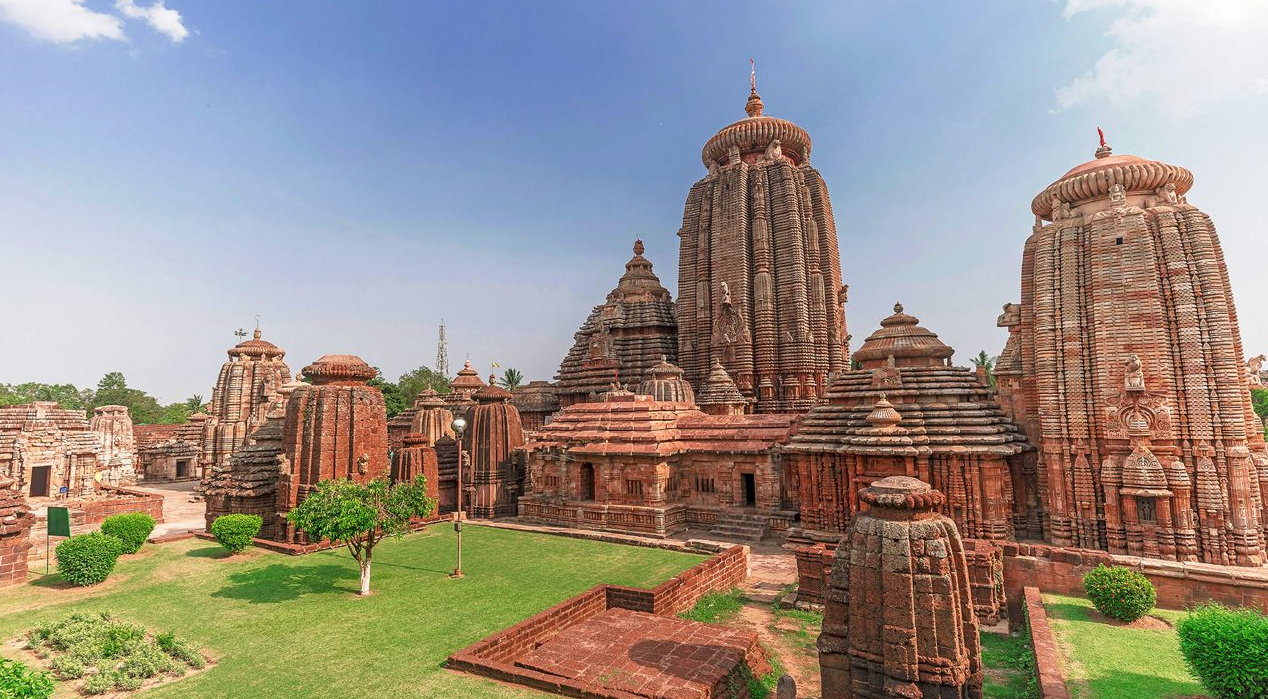
Odisha is a state in India. It is located in the eastern part of the country, bordered by the states of Jharkhand and West Bengal to the north and northeast, the Bay of Bengal to the east, Andhra Pradesh and Telangana to the south, and Chhattisgarh to the west. Before India gained independence in 1947, the capital of Odisha was Cuttack. The current capital was later established in Bhubaneswar, situated in the east-central coastal plains near the city’s historic temples. The state’s name was officially changed from Orissa to Odisha at the end of 2011.
Odisha’s geological formations vary considerably in both age and nature. In the interior, which extends into the stable landmass of the Indian subcontinent (a fragment of the ancient supercontinent Gondwana), some of the oldest rocks of the Earth’s crust are found, while along the coast there are deltaic alluvial deposits and wind-formed sand dunes.
The state can be broadly divided into four natural regions: the Northern Plateau, the Eastern Ghats, the Central Region, and the Coastal Plains. The Northern Plateau (in the northern part of the state) is an extension of the forest-covered and mineral-rich Chota Nagpur Plateau located in Jharkhand. The Eastern Ghats, which run roughly parallel to the coast and rise to an elevation of approximately 3,600 feet (1,100 meters), are the remnants of a very old range of hills in eastern peninsular India. The Central Region comprises a series of plateaus and valleys in the interior, west and north of the Eastern Ghats; the plateau areas are resource-poor, but several valleys—notably those of Kalahandi, Bolangir, Hirakud, and Jharsuguda—have soils and irrigation facilities to support local agriculture. The Coastal Plains are formed from alluvial deposits laid down by several rivers flowing into the Bay of Bengal; this region is locally known as the Balasore (Baleshwar) coastal plain in the northeast, the Mahanadi River delta in the center, and the Chilika plain in the southwest.
Besides the Mahanadi, the principal rivers are the Subarnarekha, Budhabalanga, Baitarani, Brahmani, Rushikulya, and Vamsadhara. Odisha’s brackish Chilika Lake is one of the largest lagoons in India. Notable mountain peaks include Mahendragiri (4,924 feet [1,501 meters]), Malayagiri (3,894 feet [1,187 meters]), and Megasini (3,822 feet [1,165 meters]).
Plant & Animal Life
The forests of Odisha cover approximately one-third of the state’s area. They are generally classified into two categories: tropical moist deciduous and tropical dry deciduous. The former are found in the hills, plateaus, and more isolated areas of the northeastern part of the state, while the latter are found in the southwest. Forest density generally decreases from northeast to southwest. Both types of forests support bamboo growth, as well as tropical hardwoods such as teak, rosewood, and padauk.
Odisha’s forests are home to a wide variety of wildlife, much of which is protected in parks and sanctuaries established by the state and central governments. Notable mammals include elephants, gaur (Indian bison), blackbuck, four-horned antelope, several species of tigers, and various monkey species. Peacocks are among the distinctive birds found in Odisha’s forests. In the east-central coastal region, Chilika Lake serves as a breeding ground for numerous fish and waterfowl.
Population structure
Scheduled Tribes (the official name given by the government to tribal peoples who are outside the mainstream Indian social system) and Scheduled Castes (formerly known as “untouchables”; the official name for groups at the bottom of the caste system) together constitute approximately two-fifths of Odisha’s population. The tribal peoples are divided into three linguistic groups: those speaking Munda languages of the Austroasiatic language family, those speaking various languages of the Dravidian family, and those speaking Odia (or Oriya), an Indo-Aryan language. Historically, the Santal, Savara, and Juang peoples have been the most prominent among the Munda language speakers, while the Khond, Gond, and Oraon (Kurukh) have been the principal speakers of Dravidian languages. The Bhuiyan people speak Odia. By the beginning of the 21st century, many tribal peoples had adopted Odia as their primary language. Odia is the official language of Odisha and is spoken by the majority of Odisha’s non-tribal population, except in parts of the northeast, where Bengali is widely spoken.
Hindus constitute the overwhelming majority of Odisha’s population. Muslims are the largest religious minority in all regions of the state, except for a few administrative areas, including Sundargarh, Ganjam, Koraput, and Phulbani, where Christians are more numerous. However, in no district of the state does any minority religion claim more than a small percentage of the population.
The caste system in Odisha is similar to that of other states in eastern India. Immediately below the highest-ranking Brahmans are the Karan (scribe class), who claim Kshatriya (military) status, considering the pen rather than the sword as their weapon. The Khandayat (literally, “sword wielders”) are mostly farmers but call themselves “Khandayat-Kshatriya.” Tribal peoples have long been undergoing a process of assimilation into Hinduism, and many tribal chiefs have also claimed Kshatriya status. All castes consider Jagannath, one of the avatars of the Hindu deity Vishnu, to be the center of their religious beliefs. For centuries, the city of Puri, considered the abode of Jagannath, has been the only place in India where people of all castes eat together.
History of Odisha
From its earliest known history, the land roughly corresponding to present-day Odisha has been known by several names, most notably Utkala (or Okkala), Kalinga, and Odra Desha (or Oddaka), which were used in ancient literature to refer to specific tribes. The ancient Greeks knew the latter two groups as Kalingai and Oretes. These names eventually became associated with specific territories.
In the early stages of Indian history, Kalinga was already a prominent and powerful political entity. Buddhist texts mention the rule of King Brahmadatta in Kalinga at the time of Buddha’s death, which falls between the 6th and 4th centuries BCE. In the 4th century BCE, Mahapadma Nanda, the founder of the Nanda dynasty and the first empire builder of India, conquered Kalinga, but Nanda rule did not last long. In 260 BCE, the Mauryan emperor Ashoka invaded Kalinga and fought one of the greatest battles of ancient history. Following this, he renounced warfare, converted to Buddhism, and propagated peace and non-violence both within and outside India. In the 1st century BCE, the Kalinga emperor Kharavela conquered vast territories, which together constituted the Kalinga Empire.
In the 1st century CE, Kalinga emerged as a maritime power. Its overseas activities likely included the establishment of the Shailendra kingdom on the Southeast Asian island of Java (now in Indonesia) in the 8th century. During the 8th, 9th, and 10th centuries, Kalinga was ruled by the powerful Bhauma-Kara dynasty, followed by the Soma kings until the 11th century. The construction of the 11th-century Lingaraj Temple in Bhubaneswar, one of the largest Shiva temples in India, was initiated by the Soma king Yayati.
Under the rule of the Ganga dynasty, Kalinga witnessed a golden age. The Ganga ruler Anantavarman Chodaganga Deva (1078–1147) established Cuttack as his capital and ruled from the Ganges River to the Godavari River. He initiated the construction of the Jagannath (“Lord of the World”) temple in Puri. Narasimha I (1238–64) built the Sun Temple (Surya Deula) at Konark, one of the finest examples of Hindu architecture. In the 13th and 14th centuries, when much of India came under Muslim rule, independent Kalinga remained a stronghold of Hinduism, philosophy, art, and architecture.
The Ganga dynasty was followed by the Surya dynasty. Its first king, Kapilendra (1435–66), conquered territories from his Muslim neighbors and greatly expanded the Kalinga kingdom. His successor, Purushottam, barely managed to maintain these conquests. The next and last Surya king, Prataparudra, became a disciple of the great Hindu saint Chaitanya and adopted a pacifist stance. After Prataparudra’s death in 1540, the kingdom’s power declined, and in 1568, when King Mukunda was killed by his own countrymen, it lost its independence to the Afghan rulers of Bengal.
It was during the period between the 11th and 16th centuries that the name Kalinga fell into disuse. It was replaced by the older tribal name Odra Desha, which gradually evolved into Odisha (or Uddisha, or Orissa), which became Orissa in English; this spelling persisted until the original Odisha was reinstated in the early 21st century. The language of the region came to be known as Odia.
The Mughal emperor Akbar conquered Odisha from the Afghans in 1590–92. When the Mughal Empire declined in the mid-18th century, part of Odisha remained under the Nawabs of Bengal (provincial governors of Mughal India), but the larger portion passed to the Marathas, who ruled much of southern India between the 16th and 19th centuries. The Bengal portion came under British rule after the Battle of Plassey (near present-day Palashi) in 1757, and the Maratha portion was annexed by the British in 1803. Although the British controlled the entire Odia-speaking region after 1803, it continued to be administered as two separate units. It was not until April 1, 1936, that the British heeded demands for linguistic unification and constituted Orissa as a separate province. However, 26 Odia princely states remained outside the provincial administration. After India’s independence in 1947, the territory of Odisha was expanded to include all the princely states except for Seraikela and Kharsawan, which were merged into Bihar. Odisha became a state of India in 1950.
Art And Culture
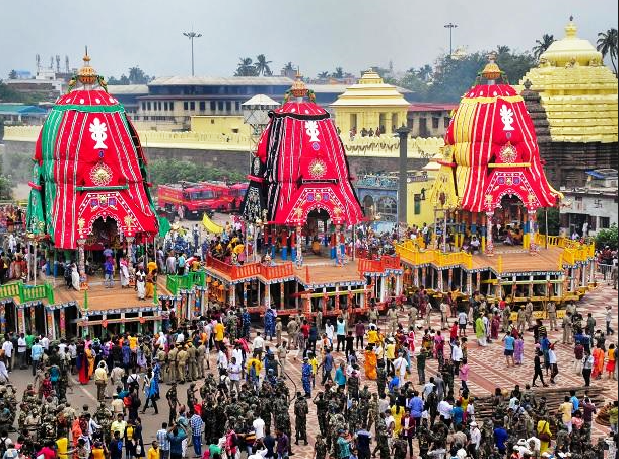
Odisha is home to many traditional festivals. One that is unique to this state is the Boita Bandana (worship of boats) ceremony, held in October or November (the date is determined according to the Hindu calendar). For five consecutive days leading up to the full moon, people gather along riverbanks or the seashore and float miniature boats in the water in memory of their ancestors, who once traveled to distant lands (such as Malaysia and Indonesia). The city of Puri is home to the Jagannath Temple, perhaps the most famous Hindu temple in India, and the temple’s annual chariot festival (known locally as Ratha Yatra), which attracts millions of people; the English word “juggernaut,” derived from the temple’s name, is inspired by the massive, seemingly unstoppable chariots used in this festival. A short distance away, in Konark, is a 13th-century temple that further illustrates the importance of the chariot in this region; it is built in the form of the chariot of Surya, the Hindu sun god.
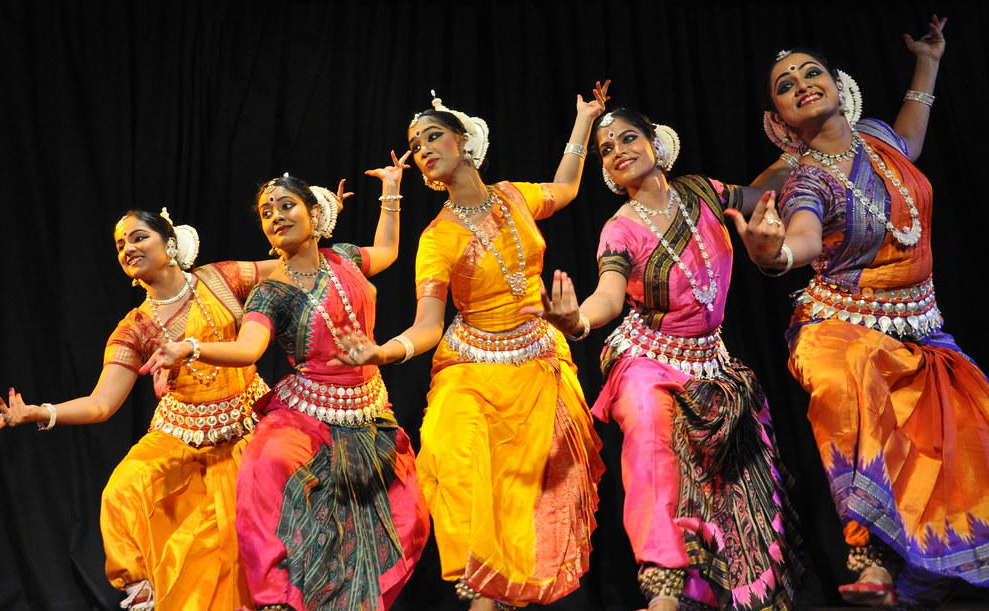
Odisha has a rich artistic heritage and has produced some of the finest examples of Indian art and architecture. Among the most notable traditions in the visual arts are mural painting, stone carving, wood carving, Pattachitra (Patt meaning “cloth” or “canvas,” Chitra meaning “painting”) – paintings depicting scenes from Hindu mythology – and palm leaf painting. The state is also widely recognized for its exquisite silver filigree work, pottery, and decorative crafts.
In the tribal areas, Odisha boasts a variety of dance forms. The music of the Madal (a type of local drum) and flute is characteristic of the rural areas. Odisha’s classical dance, known as Odissi, has survived for over 700 years. Originally, it was a temple dance performed for the deities. The dance movements, gestures, and postures are depicted in the sculpted figures on the walls of the great temples.
Chhau, a type of mask dance associated with the Mayurbhanj district and surrounding areas in the north, is emblematic of Odia culture. To promote dance and music, the Kala Vikash Kendra was established in Cuttack in 1952, and it remains a leading venue for art performances and training in Odisha.
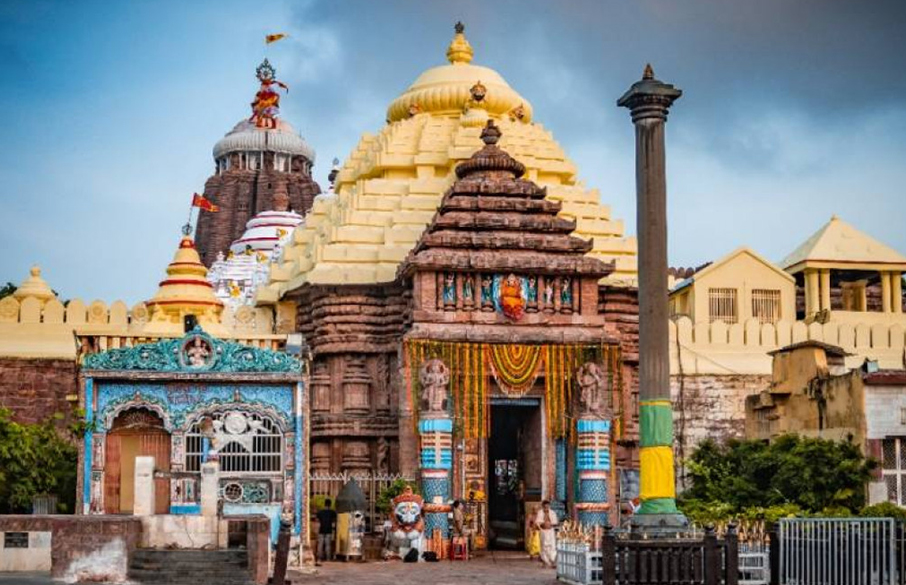
Jagannath Temple, Puri
The Jagannath Temple is a Hindu temple dedicated to Jagannath, a form of Vishnu. It is located in Puri, Odisha, on the eastern coast of India.
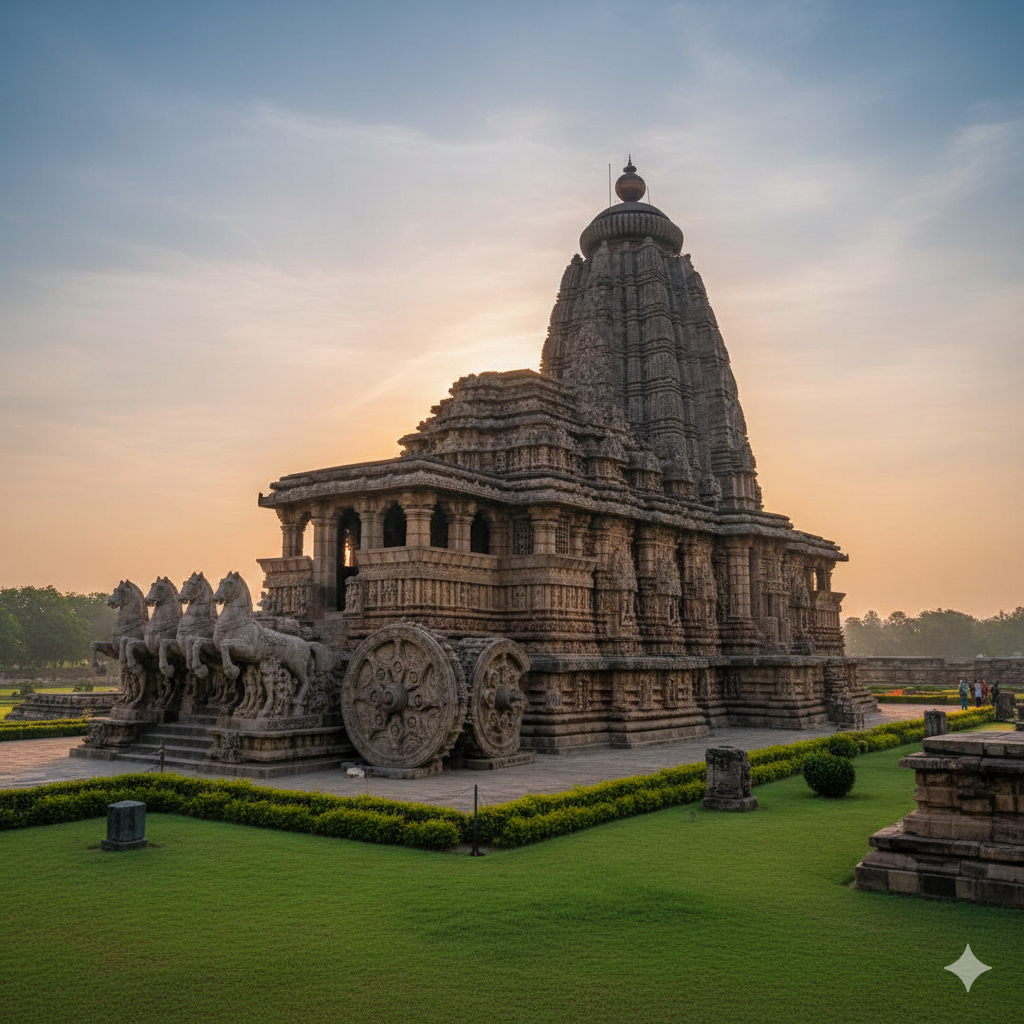
Konark Sun Temple
The Sun Temple of Konark is a proud symbol of India's rich cultural heritage. If you are interested in history, art, and spirituality