
Lotus Temple New Delhi: A comprehensive guide to its Architecture, History, and visitor information.
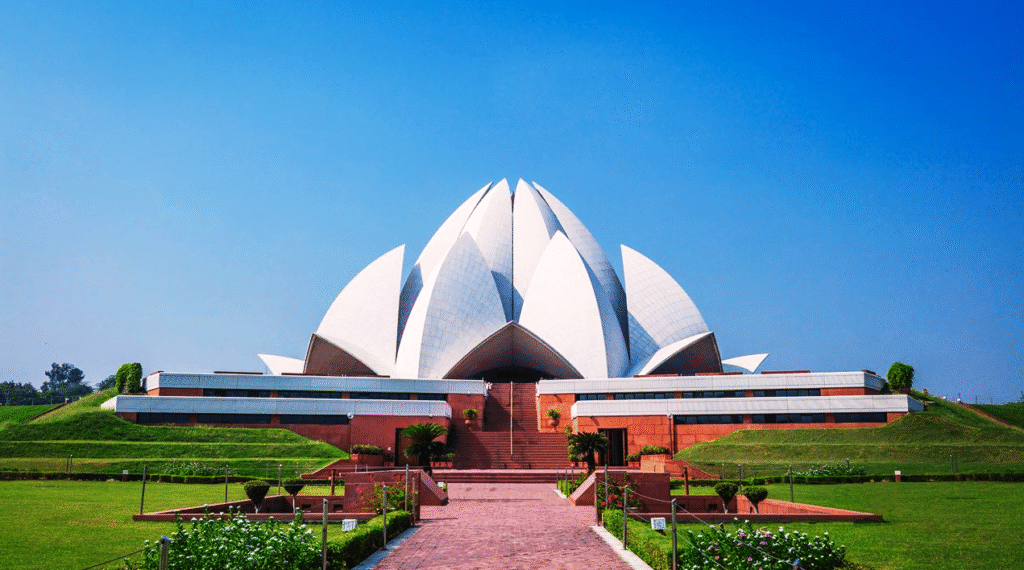
The Lotus Temple, also known as the Baháʼí House of Worship, located in New Delhi, the capital of India, is a magnificent blend of modern architecture and spiritual tranquility. Situated in Bahapur village near Nehru Place, this temple is not only a major tourist attraction in Delhi but is also considered a symbol of unity and peace worldwide. Completed in 1986, the temple is world-renowned for its unique lotus-shaped design.
In this comprehensive guide, we will delve into the history of the Lotus Temple, its unique architecture, the principles of the Baháʼí faith, visiting hours, and how to get there.
The history of the Lotus Temple is deeply intertwined with the foundations of the Baha’i Faith and its spread in India.
Roots of the Baha’i Faith
The Baha’i Faith is a modern religion that emphasizes the unity of humanity. It believes that all religions originate from the same God. The Baha’i Faith arrived in India in the late 19th century.
Planning the Construction
The idea for this temple emerged in the 1970s. The land for its construction was selected in the Bahapur area of Delhi. The main objective was to create a place where people of any religion, caste, or nationality could pray to God without discrimination.
Architect and Construction Process
Iranian architect Fariborz Sahba was chosen to lead this massive project. Construction of the temple began in 1980 and took approximately six years to complete. It was opened to the public in December 1986. The total construction cost at the time was approximately $10 million.
Architecture and Design
The architecture of the Lotus Temple is considered a prime example of the ‘Expressionist’ style.
Why the Lotus?
In Indian culture, the lotus flower is considered a symbol of purity, peace, and divinity. It holds special significance in Hinduism, Buddhism, and Jainism. Fariborz Sahba chose a design that resonated with Indian traditions while also reflecting modernity.
Structural Features
27 Petals: The main structure of the temple is composed of 27 free-standing marble petals.
Nine Doors: The petals are arranged in groups of three, forming nine entrances. In the Baha’i faith, the number ‘nine’ symbolizes completeness.
White Marble: The exterior of the temple is clad in white marble sourced from Mount Pentelicus in Greece.
Ponds and Gardens: Nine blue water ponds surround the temple, not only enhancing its beauty but also contributing to natural ventilation (cooling).
The most unique aspect of the Lotus Temple is its method of worship.
Absence of Idol Worship
While temples often have idols and rituals, the Lotus Temple has no idols, pictures, or altars. There are no priests, nor are any religious sermons given.
Silent Prayer
Visitors and devotees are expected to maintain complete silence inside the hall. People can sit here and read sacred texts of any religion of their choice or simply meditate.
Unity of Humanity
There is no discrimination at the temple’s entrance. Whether you are Hindu, Muslim, Christian, or atheist—the doors are open to all without distinction.
Located in the heart of New Delhi, it is very easy to reach.
- By Metro
This is the most convenient way.
Nearest Metro Station: Kalkaji Mandir.
This station is on both the Violet Line and the Magenta Line. The temple is just a 5-10 minute walk from the metro station.
- By Bus
Delhi Transport Corporation (DTC) buses run from all parts of the city to Nehru Place or Kalkaji. - By Air
Indira Gandhi International Airport (IGI) is approximately 16-18 km away. You can reach here from the airport by taking a cab or the metro (Airport Express Line to Violet Line).
The best time to visit Lotus Temple
According to the weather:
Delhi’s summers are quite hot, so the best time to visit is from October to March (the winter season).
According to the time of day:
It’s best to arrive early in the morning (9:00 AM) to avoid the crowds. The temple’s illumination in the evening is a sight to behold, making it even more magnificent.
Note: The Lotus Temple is closed on Mondays.
Interesting Facts About the Lotus Temple
- Globally Popular: Did you know that the Lotus Temple receives more visitors than the Taj Mahal? According to several reports, over 4 million people visit it every year.
- Award-Winning: Fariborz Sahba received several international architectural awards for its design.
- Green Building: The temple utilizes natural light so effectively that very little electricity is needed during the day.
- Center of Peace: The main hall can accommodate 2,500 people at a time.
- One of Seven Worldwide: There are seven other major Baháʼí temples around the world, but the Lotus Temple in Delhi is the most famous.
Places to visit near Lotus Temple (Nearby Attractions)
If you’re visiting the Lotus Temple, you can also include these places on your itinerary:
- Kalkaji Temple: An ancient and famous Hindu temple located right next to the Lotus Temple.
- ISKCON Temple: Also located nearby and known for its grandeur.
- Nehru Place: If you’re interested in gadgets or shopping, this is one of Asia’s largest IT markets.
- Hauz Khas Village: Famous for its lake and vibrant nightlife.
Frequently Asked Questions (FAQs)
Question 1: Is there an entry fee for the Lotus Temple? Answer: No, entry to the Lotus Temple is completely free.
Question 2: Is photography allowed inside the temple? Answer: Photography is strictly prohibited inside the main prayer hall of the temple, but you can take pictures in the outer premises and gardens.
Question 3: What should I wear inside the temple? Answer: Although there is no strict dress code, it is a religious site, so modest clothing is considered appropriate.
Question 4: Can I wear shoes inside the temple? Answer: No, you have to deposit your shoes at a designated counter before entering the main complex.
Conclusion
The Lotus Temple is not just a concrete structure, but an embodiment of modern India’s secular spirit. Its white petals convey a message of peace and brotherhood. If you’re looking for a moment of tranquility amidst the hustle and bustle of Delhi, a visit to the Lotus Temple will be a truly memorable experience.